
The industrial gases market is undergoing a profound transformation driven by the convergence of global sustainability imperatives, rapid technological advancements, and the evolving needs of key end-use industries. From steel production and electronics manufacturing to healthcare and clean energy, industrial gases have become the invisible enablers of modern life and future-ready economies. As countries decarbonize and industries embrace innovation, the global industrial gases sector is projected to grow substantially—rising from an estimated market value of over $100 billion in 2024 to exceed $160 billion by 2033.
This growth trajectory is underpinned by the diverse and indispensable roles that gases such as oxygen, nitrogen, hydrogen, argon, carbon dioxide, helium, and a wide array of specialty gases play across a vast spectrum of industries. In healthcare, oxygen remains vital for medical treatment, emergency care, and life support systems. Nitrous oxide and other medical gases are essential components in anesthesia and sterilization processes. As the global population ages and medical technology advances, demand for these life-saving gases continues to increase, particularly in emerging markets where healthcare infrastructure is expanding rapidly.
In the energy and petrochemical sectors, industrial gases serve as catalysts for refining, combustion control, and clean energy transitions. Hydrogen, in particular, has emerged as a cornerstone of the green energy movement. The shift toward low-carbon and renewable hydrogen has accelerated investment in electrolyzers and production hubs, placing industrial gases at the center of the global decarbonization effort. Simultaneously, oxygen and nitrogen continue to play foundational roles in refining processes, where precise combustion control and chemical reactions are essential.
The steel and metals industries are among the largest consumers of industrial gases, especially oxygen. In countries like India, over 55% of national oxygen production is directed toward blast furnaces, welding, and cutting operations within the steel sector. These gases support enhanced productivity, cleaner processes, and greater energy efficiency—an increasingly important factor as heavy industries aim to align with net-zero goals. Meanwhile, argon is widely used for shielding in arc welding and in the production of specialty alloys.
Electronics and semiconductor manufacturing represent another critical domain. The intricate fabrication of semiconductors demands ultra-high-purity gases such as nitrogen, hydrogen, helium, and fluorinated compounds. These gases are used to etch microscopic circuits, clean wafers, and enable plasma processes. With the global push to expand semiconductor production capacity and reduce dependence on single-source suppliers, demand for industrial gases in this sector is poised to grow exponentially—especially across East Asia, India, and the United States.
In the food and beverage industry, industrial gases ensure food preservation, freezing, packaging, and carbonation. Carbon dioxide is used in beverage production and modified atmosphere packaging, while nitrogen helps displace oxygen to prevent spoilage. As consumer demand rises for fresh and minimally processed foods, especially in urban markets, the use of gases for cold-chain logistics and packaging will continue to increase.
Chemical and pharmaceutical industries also rely heavily on industrial gases for process control, inert atmospheres, and synthesis reactions. The consistent purity, pressure, and flow of gases like nitrogen, hydrogen, and carbon dioxide are essential for safe and effective production of chemicals, drugs, and polymers. Biotech and pharmaceutical companies additionally depend on cryogenic gases for cell preservation, storage of vaccines, and advanced research.
Water treatment and environmental protection initiatives further drive gas consumption. Oxygen and ozone are used for disinfection and wastewater aeration, while carbon dioxide plays a role in pH control. In regions grappling with water scarcity and pollution, these applications are becoming increasingly essential. Furthermore, gases are being integrated into carbon capture, utilization, and storage (CCUS) projects aimed at reducing emissions from industrial processes.
Globally, the industrial gases market is being shaped by several influential countries. The United States, Germany, China, Japan, and France are home to some of the largest producers and consumers, supported by advanced industrial bases and strong R&D infrastructure. These nations have also taken the lead in developing new gas technologies, particularly in green hydrogen and energy storage. However, emerging markets are becoming increasingly prominent. India, for example, is witnessing rising demand across all sectors—from steel and electronics to healthcare and water treatment. Southeast Asia, the Middle East, and Africa are also growing rapidly, driven by urbanization, manufacturing expansion, and the need for reliable industrial infrastructure.
The future of the industrial gases industry will be increasingly influenced by sustainability and innovation. Companies are moving aggressively to decarbonize their operations, adopting renewable energy to power air separation units (ASUs) and building green hydrogen plants that produce zero-carbon fuel. Carbon dioxide, once treated as a waste product, is now being captured and reused in applications such as carbonated beverages, building materials, and enhanced oil recovery. This shift is not only environmentally necessary but also opens up new commercial avenues for industrial gas suppliers.
Digitalization is another force reshaping the industry. Smart plants equipped with Internet of Things (IoT) sensors, advanced analytics, and AI-powered monitoring are optimizing gas production and distribution. Predictive maintenance of critical equipment helps reduce downtime, while digital twins enable real-time modeling of operations. These tools increase safety, reduce energy consumption, and improve customer responsiveness.
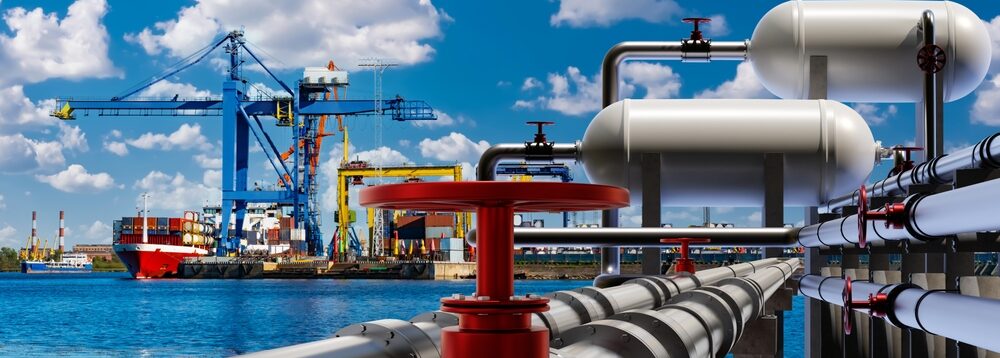
At the core of all industrial gas infrastructure is a suite of flow control technologies that ensure safety, precision, and reliability. Valves, actuators, pumps, pipes, and fittings play a crucial role in every stage—from production and storage to transport and end-user delivery. Cryogenic valves, for example, are essential for controlling liquefied gases such as nitrogen, oxygen, and LNG. Pressure relief valves protect against system overpressurization, while actuators enable automated and remote valve operation in large-scale facilities. Pumps designed for cryogenic or high-pressure gas handling are indispensable in ASUs, hydrogen refueling stations, and liquefaction terminals. Pipes and fittings, often made from stainless steel or specialized alloys, must withstand extreme temperatures and pressures while maintaining gas purity. These components form the backbone of gas distribution networks, enabling safe and efficient operations.
Instrumentation also plays a vital role. Flow meters, gas analyzers, pressure gauges, and leak detectors ensure that industrial gases meet exacting standards for purity, pressure, and composition. In sectors such as semiconductors and pharmaceuticals, even trace levels of contamination can lead to costly defects or compromised safety. Precision and control are therefore paramount, making high-performance flow control systems indispensable to the industry.
To conclude, the industrial gases industry is not only expanding—it is evolving into a cornerstone of global sustainability, digital innovation, and industrial resilience. From green hydrogen and AI-driven optimization to expanding applications in health, energy, and electronics, the sector’s outlook is robust. Supporting this growth is a vast network of flow control technologies and systems that make it all possible. As demand surges and the world transitions toward cleaner, smarter, and more efficient industries, both industrial gas suppliers and flow control manufacturers will play an integral role in shaping a more sustainable and technologically advanced global economy.
Know more about Global Flow Control!
Global Flow Control is an innovative online exhibition designed to connect flow control manufacturers, distributors, buyers, and industry professionals with a global audience. The platform offers a cost-effective and efficient way for companies to showcase their products along with detailed specifications—ranging from valves, actuators, pumps, pipes, and fittings—to a targeted global market 24/7. In addition to product showcasing, the platform provides a variety of features, including a Buyers Portal to assist buyers source flow control products, access to Global Projects and Tenders, Industry Project News, Industry focused Blogs, as well as a Weekly Round-up of Global Projects Newsletter. These resources are specifically tailored to support the flow control community worldwide and foster valuable industry connections. For more information about the platform check out www.globalflowcontrol.com OR contact us ON info@globalflowcontrol.com